David and Lucile Packard Foundation California Family Foundations
David and Lucile Packard Foundation Headquarters
Last updated| David and Lucille Packard Foundation Headquarters | |
|---|---|
 Entrance of the edifice | |
 | |
| Full general information | |
| Type | Function |
| Address | 343 2d Street, Los Altos, California, 94022, United States |
| Structure started | Nov 2009 |
| Completed | July 2012 |
| Toll | $37.two million |
| Owner | David and Lucile Packard Foundation |
| Technical details | |
| Flooring surface area | 50,956 sq. ft |
| Blueprint and structure | |
| Compages firm | EHDD |
| Structural engineer | Tipping Mar |
| Civil engineer | Sherwood Blueprint Engineers |
| Chief contractor | DPR Construction |
The David and Lucile Packard Foundation Headquarters is the corporate headquarters of the David and Lucile Packard Foundation, located in Los Altos, California. The Packard Foundationl was created in 1964 past David Packard and his wife Lucile Salter Packard, one of the top 100 grantmaking foundations in the United States, with the goals of improving the lives of children, enabling the artistic pursuit of science, advancing reproductive health, and conserving and restoring the Earth'due south natural systems. The David and Lucile Packard Foundation Headquarters is designed by EHDD to be the largest net null free energy building in California, and it has successfully reduced the energy utilisation past 65% over conventional buildings.
- Cyberspace Zero Energy Building pattern
- Basic edifice design
- Passive systems
- Mechanical design
- Occupancy survey report
- Awards
- Run across also
- References
- External links
The pattern of the architecture took advantage of the California climate and surroundings, and adopted passive and bioclimatic strategies in searching for an integrated internet nil energy building design. It was awarded as the tiptop 10 light-green building in 2014, Net Zip Free energy Building by The Living Building Challenge™ 2013, and LEED Platinum 2013. The synergy of the integration design for net zero energy is meaning, which includes many aspects, for instance, re-development site of brownfield, on-site free energy production through photovoltaic, aggressive reduction in plug loads, a triple-chemical element glazing organization engineered, fabricated and installed by AGA (Architectural Drinking glass and Aluminum), [ane] plus all-electric heating arrangement, chilled beams and radiant panels for cooling, loftier daylight autonomy, transportation management, and rainwater recycling.
Net Nil Energy Building design
The design strategies of the David and Lucile Packard Foundation Headquarters follow this Zero Free energy Building Design guideline, and in the post-obit paragraphs, they will be described in detail and in the order of design priority.
Basic building design
Location and climate
David and Lucile Packard Foundation Headquarters is located in Los Altos Northern California, on the southward stop of San Francisco Bay. Los Altos receives about 37 inches of rain annually, 263 sunny days per twelvemonth. It has moderate temperature and humidity, the boilerplate high temperature in the summer is 78 degrees, and the average depression temperature in the winter is 39 degrees .
Site design
David and Lucile Packard Foundation Headquarters is orientated 40 degrees off true north to fit in the urban textile. The site orientation combined with multi-layering shading strategies made access to winter sun and avoid summer sun, at the same fourth dimension allowed fresh air in the interior spaces through an operable façade. Instead of grouping the programs into ane wedlock block, the architect designed a center courtyard to bring sunlight and wind into more spaces.
Edifice on a previously developed, damaged, or polluted brownfield site, and designing the edifice and then that it restores that site helps to mitigate previous environmental degradation. [ii] David and Lucile Packard Foundation Headquarters set a good case for the reuse of brownfield. Earlier the development, the site was 97% impervious, covered in substandard, mostly unoccupied buildings and asphalt parking lots, and at present it has reduced the imperviousness to 35% and the landscape is planted with local Californian vegetation. The design also took account the transportation needs in the customs, the team adult a Transportation Demand Management Plan (TDMP) to not only reduce the need for individual car parking but likewise offers alternatives for commuting.
Insulation, windows, and shading
The building has high standard insulation pattern, R-24 walls and roof and triple-element glazing (R-7.7). Occupants are able to adjust and control the surround past operating the windows and doors with a dashboard guidance showing when is the good timing to open and close windows depending on the outdoor temperature, wind speed, wind direction and relative humidity. The dimensions and angles of the shading devices were calculated from the locations of the sun in different seasons. The horizontal shading blocks the high summertime sun and allows low winter sun to enter the interior of the building, and other devices are congenital into the design with elements such equally trees, balconies, and trellis, which create a rich layering of lighting shades.
Materials
- 95% of materials from deconstruction were diverted from landfill
- Wood/steel hybrid structure, wood frame walls and all wood was FSC (Forest Stewardship Quango)-certified
- Less embodied energy materials, such as 70% replacement-cement-for-slag concrete
- Cloth sourcing: wood veneer sourced from Eucalyptus trees felled during the Doyle Drive rebuilding project in San Francisco, California. Exterior wood is FSC-certified western red cedar. Stone is Mt. Moriah from the border of Utah and Nevada, within a 500-mile radius from the site. The outside copper is 75% recycled, with a long life span and integral finish. Pineapples are a delicacy in Northern Guatemala
Passive systems
Heating, cooling, and lighting
The accessibility of the sunlight is one of the key elements affect the positions and shapes of the building. 2 40-foot wide offices were placed autonomously to create a primal zone for sunlight to enter from multiple facades in the building. The narrow program allows sufficient daylight to reach deeper into the office spaces, and increase the daylight autonomy. Increment in daylight autonomy reduces thirty% of the energy consumption from artificial lighting compared to a standard commercial building. The high transmittance of daylight in the winter (shading volition block the straight sunlight in the summer) will also increment the heat gain and potentially reduce the need for heating. Interior blinds are user-controlled to improve visual comfort, and it will ascension automatically in the evening. The artificial light volition dim or brighten upwards according to the change of daylighting.
The edifice is monitored past indoor sensors that send direct reminders to occupants to open the windows when natural ventilation mode is on.
H2o recycling
Rainwater from the roof is routed to a twenty,000-gallon cloak-and-dagger cistern to encounter 90% of toilet flushing and lx% of irrigation demand. The cistern overflows into a detention pond minimize tempest water reaching the public storm system, and the tempest water meridian flow rates and volumes are reduced approximately 50% from pre-project levels.
Mechanical design
Heating and cooling
In the winter, when the temperature drops to a certain degree, the building will be preheated to 23°C (74°F) in the early morning past the combination of air handlers and heat water beams in specific areas in the office spaces. And during the working hours, the heater volition exist turned off and the building heating will be fully relied on the internal heat proceeds from the computers, printers, and oestrus generated from the human bodies.
Heating demand is larger than cooling, as the summer temperature is pretty moderate in Los Altos. H2o is stored and cooled in two 25,000 gallons undercover tanks, and in the morn, it is pumped into the chilled beams to spread out to specific interior spaces. Also chilled beams, there are three air treatment units. Chilled beam system is designed with variable speed pumps and 130° angled pipes, which reduce the energy loss due to friction from the h2o flow compared to chilled beam system with typical angle pipes. This result is 75% reduction in ductwork and 75% reduction in pump free energy, and the total cooling energy is reduced ninety% from a typical chiller and VAV organization.
Renewable free energy
Despite the orientation and slope of the roof is not customized for solar collection, the photovoltaic product most of the fourth dimension covers 100% of the building consumption. In the showtime year of performance, the building was free energy positive with a net energy use intensity (EUI) of −4 thousand British thermal units per foursquare foot (−45 MJ / 10002 ) per twelvemonth, and total EUI of 22 m British thermal units per foursquare foot (250 MJ/grand ii ) per year.
Occupancy survey report
The building received 97% in overall comfort satisfaction in the occupancy survey study conducted by the Center for Built Surround. The survey also shows that 92% of the people are satisfied with air quality, 91% in cleanliness and maintenance, 76% in lighting, 86% in office furnishings, eighty% in office layout, 73% in thermal condolement, and 60% in audio-visual quality . Acoustic satisfaction is insufficiently low due to open areas in the part space and hard surfaces of radiant floors and ceilings; people concerned about overhearing private conversation on the phone and with the neighbors. Consistently reflecting the aforementioned business of open areas, the office layout survey besides shows that people think the partitions and walls are also low or too transparent and feel the lack privacy in the working spaces.
Awards
- 2014 Livable Buildings Laurels
- 2014 Top Ten Dark-green Building
- 2013 Cyberspace Naught Free energy Building
- 2013 LEED Platinum
- 2013 Honor Award: Sustainability
- 2013 Green Building with Wood Design Award
- 2012 All-time Dark-green Project-Structures Awards
- 2012 Best Green Project-ENR California
See also
- Leadership in Energy and Environmental Blueprint
- Zero-free energy building
- David and Lucile Packard Foundation
- Santa Clara County, California
- Living Building Claiming
- Sustainable architecture
Related Research Manufactures

Solar energy is radiant light and estrus from the Sun that is harnessed using a range of ever-evolving technologies such every bit solar heating, photovoltaics, solar thermal energy, solar architecture, molten common salt power plants and artificial photosynthesis.

A Trombe wall is a massive Equator-facing wall that is painted a night colour in order to absorb thermal energy from incident sunlight and covered with a drinking glass on the exterior with an insulating air-gap betwixt the wall and the glaze. A Trombe wall is a passive solar edifice blueprint strategy that adopts the concept of indirect-gain, where sunlight outset strikes a solar energy collection surface which covers thermal mass located between the Sun and the space. The sunlight captivated by the mass is converted to thermal energy (heat) and so transferred into the living space.

In passive solar building design, windows, walls, and floors are fabricated to collect, shop, reflect, and distribute solar energy, in the class of estrus in the winter and reject solar heat in the summertime. This is called passive solar design considering, unlike active solar heating systems, information technology does not involve the utilise of mechanical and electrical devices.

A depression-energy house is characterized past an energy-efficient design and technical features which enable it to provide high living standards and comfort with low energy consumption and carbon emissions. Traditional heating and active cooling systems are absent, or their use is secondary. Depression-energy buildings may exist viewed as examples of sustainable compages. Low-energy houses often have active and passive solar building pattern and components, which reduce the firm's energy consumption and minimally touch the resident's lifestyle. Throughout the world, companies and non-profit organizations provide guidelines and issue certifications to guarantee the energy performance of buildings and their processes and materials. Certifications include passive house, BBC - Bâtiment Basse Consommation - Effinergie (France), zero-carbon house (Britain), and Minergie (Switzerland).

Passive firm is a voluntary standard for energy efficiency in a building, which reduces the building'due south ecological footprint. Information technology results in ultra-low energy buildings that require little energy for space heating or cooling. A similar standard, MINERGIE-P, is used in Switzerland. The standard is not confined to residential properties; several office buildings, schools, kindergartens and a supermarket accept also been constructed to the standard. Passive design is not an attachment or supplement to architectural design, but a design process that integrates with architectural pattern. Although information technology is principally practical to new buildings, information technology has also been used for refurbishments.

Edifice automation is the automatic centralized control of a building's HVAC, electrical, lighting, shading, Access Control, Security Systems, and other interrelated systems through a Edifice Management Organisation (BMS) or Building Automation System (BAS). The objectives of edifice automation are improved occupant condolement, efficient operation of edifice systems, reduction in energy consumption, reduced operating and maintaining costs, increased security, historical performance documentation, remote admission/control/functioning, and improved life cycle of equipment and related utilities.
Displacement ventilation (DV) It is a room air distribution strategy where conditioned outdoor air is supplied at a low velocity from air supply diffusers located nearly floor level and extracted above the occupied zone, usually at ceiling height.

A Zero Energy Building (ZEB), besides known every bit a Net Zero Energy (NZE) building, or a Zero Net Energy (ZNE) building, is a building with cyberspace zippo energy consumption, meaning the total amount of energy used past the building on an annual basis is equal to the amount of renewable energy created on the site or in other definitions past renewable free energy sources offsite, using technology such as oestrus pumps, high efficiency windows and insulation, and solar panels. The goal is that these buildings contribute less overall greenhouse gas to the atmosphere during operations than similar not-ZNE buildings. They exercise at times consume non-renewable energy and produce greenhouse gases, but at other times reduce energy consumption and greenhouse gas production elsewhere by the aforementioned amount. Zero-energy buildings are not merely driven by a want to have less of an impact on the environment, simply they are also driven by money. Tax breaks too as savings on free energy costs make Cipher-energy buildings financially feasible. A similar concept approved and implemented by the European union and other agreeing countries is nearly Goose egg Energy Edifice (nZEB), with the goal of having all buildings in the region under nZEB standards by 2020. Terminology tends to vary between countries, agencies, cities, towns and reports, so a general knowledge of this concept and its various employments is essential for a versatile understanding of clean energy and renewables. The IEA and European Marriage most commonly use Net Zero Free energy, with "goose egg net" mainly used in the The states.

The New York Times Building is a skyscraper at 620 8th Avenue, on the west side of Midtown Manhattan, New York Metropolis. Its principal tenant is The New York Times Company, publisher of The New York Times as well as the International New York Times, and other newspapers. The building is 1,046 ft (318.eight thou) tall to its pinnacle, with a roof height of 748 ft (228 m), and contains 52 stories.
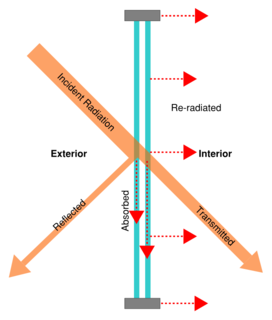
Solar gain is the increment in thermal free energy of a infinite, object or structure as it absorbs incident solar radiation. The amount of solar gain a infinite experiences is a role of the total incident solar irradiance and of the ability of any intervening material to transmit or resist the radiation.
A chilled beam is a type of radiation/convection HVAC system designed to oestrus and cool big buildings. Pipes of water are passed through a "beam" either integrated into standard suspended ceiling systems or suspended a short distance from the ceiling of a room. As the beam chills the air around it, the air becomes denser and falls to the flooring. It is replaced by warmer air moving up from beneath, causing a constant passive air motion chosen convection, which cools the room. Heating works in much the aforementioned fashion, similar to a steam radiator. There are two types of chilled beams. Some passive types rely solely on convection, while there is a "radiant"/convective passive type that cools through a combination of radiant exchange (twoscore%) and convection (60%). The passive approach can provide higher thermal comfort levels, while the active type uses the momentum of ventilation air entering at relatively high velocity to induce the apportionment of room air through the unit. A chilled beam is like in appearance to a VRF unit of measurement.
Lucile Packard Children's Hospital at Stanford (LPCH) is a nationally ranked women's and children's hospital which is part of the Stanford Academy Health system. The hospital is located side by side to the campus at 725 Welch Road, Palo Alto, California. It was founded in 1991 and is staffed by over 650 physicians with 4,750 staff and volunteers. The hospital specializes in the care of infants, children, teens, immature adults aged 0–21, just sometimes treats older adults and expectant mothers. Lucile Packard Children's Hospital is an ACS verified Level 1 regional pediatric trauma center, ane of 7 in the state.
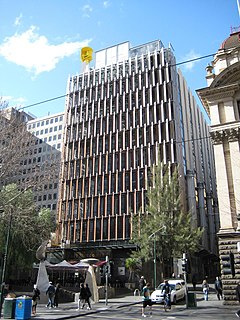
Council Business firm two (also known every bit CH2 ), is an part building located at 240 Little Collins Street in the CBD of Melbourne, Australia. It is used by the Metropolis of Melbourne council, and in April 2005, became the first purpose-built office edifice in Australia to achieve a maximum Six Green Star rating, certified by the Dark-green Edifice Council of Commonwealth of australia. CH2 officially opened in Baronial 2006.

The Swanston Academic edifice is an RMIT building designed by the architecture firm Lyons and is located on Swanston Street in Melbourne across from Peter Corrigan designed building 8 and ARM'south Storey Hall. Construction began in September 2010 and was completed in September 2012. The budget for the SAB was $200,000,000. The new building contains 35,000 foursquare metres (380,000 sq ft) of floor infinite, is 11 storeys loftier and provides 6 large lecture theatres for students. The colourful building is intended to reflect the cities surroundings in the façade. "The idea is to wear the 'cloak' of the city".

The Terry Thomas Building, located in the Due south Lake Union neighborhood of Seattle, Washington is a sustainable, LEED-certified office building completed in 2008. The Terry Thomas is Seattle's starting time commercial office edifice structure developed in decades without central air conditioning. It was designed past Seattle-based architectural firm Weber Thompson, who also designed the interiors of the building and utilize it as their headquarters.

DPR Construction is a commercial general contractor and construction direction firm based in Redwood Urban center, California. The privately-held, employee-owned company has 28 offices throughout the U.s. and specializes in technically complex and sustainable projects for the advanced technology/mission critical, life sciences, healthcare, higher education and commercial office markets. International offices are located in Europe and Asia.
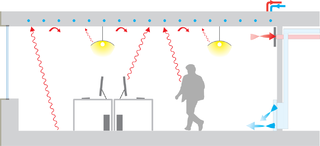
Radiant heating and cooling is a category of HVAC technologies that exchange heat past both convection and radiation with the environments they are designed to heat or cool. At that place are many subcategories of radiant heating and cooling, including: "radiant ceiling panels", "embedded surface systems", "thermally active building systems", and infrared heaters. According to some definitions, a engineering is only included in this category if radiation comprises more than 50% of its heat exchange with the environs; therefore technologies such equally radiators and chilled beams are usually not considered radiant heating or cooling. Within this category, it is practical to distinguish betwixt loftier temperature radiant heating, and radiant heating or cooling with more moderate source temperatures. This commodity mainly addresses radiant heating and cooling with moderate source temperatures, used to heat or cool indoor environments. Moderate temperature radiant heating and cooling is commonly composed of relatively large surfaces that are internally heated or cooled using hydronic or electric sources. For high temperature indoor or outdoor radiant heating, see: Infrared heater. For snow melt applications see: Snowmelt system.

The David Brower Center is a nonprofit space located in downtown Berkeley, California, containing iii floors of function space, a gallery focusing primarily on environmental and social art, briefing facilities, a 178-seat theater, and a eating house, Gather. It was named to honor David Brower, a Berkeley native who was the first executive director of the Sierra Gild and founder of the League of Conservation Voters. The Middle is part of a larger mixed use development that includes the Oxford Plaza. The David Brower Center's mission is to "inspire and nurture electric current and time to come generations of leaders, with the goal of making sustainable thinking and practices mainstream."
Passive survivability refers to a building'south ability to maintain disquisitional life-support conditions in the event of extended loss of power, heating fuel, or water. This idea proposes that designers should incorporate means for a building to continue sheltering inhabitants for an extended period of fourth dimension during and afterwards a disaster state of affairs, whether it be a tempest that causes a power outage, a drought which limits water supply, or whatever other possible event.

]
References
- ↑ Glass Magazine, "Most Innovated Free energy Efficient Glass Project ", Mobile Glass Mag folio 30, July 2013
- ↑ Allen & Iano, Edward & Joseph. Fundamentals of Edifice Construction (6thed.). Wiley. p.39. ISBN 978-1-118-13891-v.
External links
- 2014 AIA Tiptop Ten Projection
- Tipping Structure Engineers case study
- The Packard Foundation'due south Headquarters Is a Conservation Success
- International Living Future Establish case study
- EHDD Works case written report
- Eco Building Pulse April 2014
- Eco Building Pulse June 2014
- Integral Group case study
- The David and Lucile Packard Foundation: "Our Green Headquarters"
- DPR Structure case written report
- Green Source case written report
- CBE announcement
- gb&d example study
- CEB project submittal
Coordinates: 37°22′35″N 122°06′53″W / 37.37645°N 122.11461°Westward / 37.37645; -122.11461
This page is based on this Wikipedia article
Text is available under the CC BY-SA 4.0 license; additional terms may apply.
Images, videos and audio are available nether their respective licenses.
Source: https://WikiMili.com/en/David_and_Lucile_Packard_Foundation_Headquarters
0 Response to "David and Lucile Packard Foundation California Family Foundations"
Postar um comentário