How to Upload Data to S3 Bucket
Updated Feb 2021
No doubt, we're spoiled for choice with today'south diverseness of file storages. Cloud services are the most popular on the market thanks to their accessibility and ease of apply. Equally estimated, in that location exist over 2300 one thousand thousand cloud storage users beyond the globe. This figure is expected to grow even further.
With its scalable infrastructure and strong security measures, Amazon S3 is a meridian media library option of many consumers. Businesses of all sizes and industries shift to this storage after they've heard a lot most Amazon's spotless reputation and its strive for perfection.
Only Amazon was never looking for whatsoever shortcuts. And its object system sets the storage apart from the competition, while as well complicating the onboarding process for new users. Nonetheless accept it easy! With this article, we're going to tell you about Amazon S3 pitfalls.
As we have recently built DAM integration with Amazon at Pics.io, uploading and managing files on S3 became really of import for our users. And then hither nosotros are, bringing benefit to everyone who needs this info to make working with S3 a slice of cake for you.
Give Pics.io DAM a try
Gratuitous 7-twenty-four hour period trial
No credit bill of fare required
Prepare in three minutes or less
Amazon S3: Some important terminology
As a new user to Amazon, you lot may be puzzled when you start open up your account. Where is the traditional file and folder organization? What is a secret key and why are my precious files stored in buckets?
Hither is a short list of terms you might want to know before even signing in to your business relationship:
- AWS (Amazon Web Services) Direction Panel. This is a web-based application through which you will access and manage your cloud storage. Yous'll need your user proper name & password to sign in to your account.
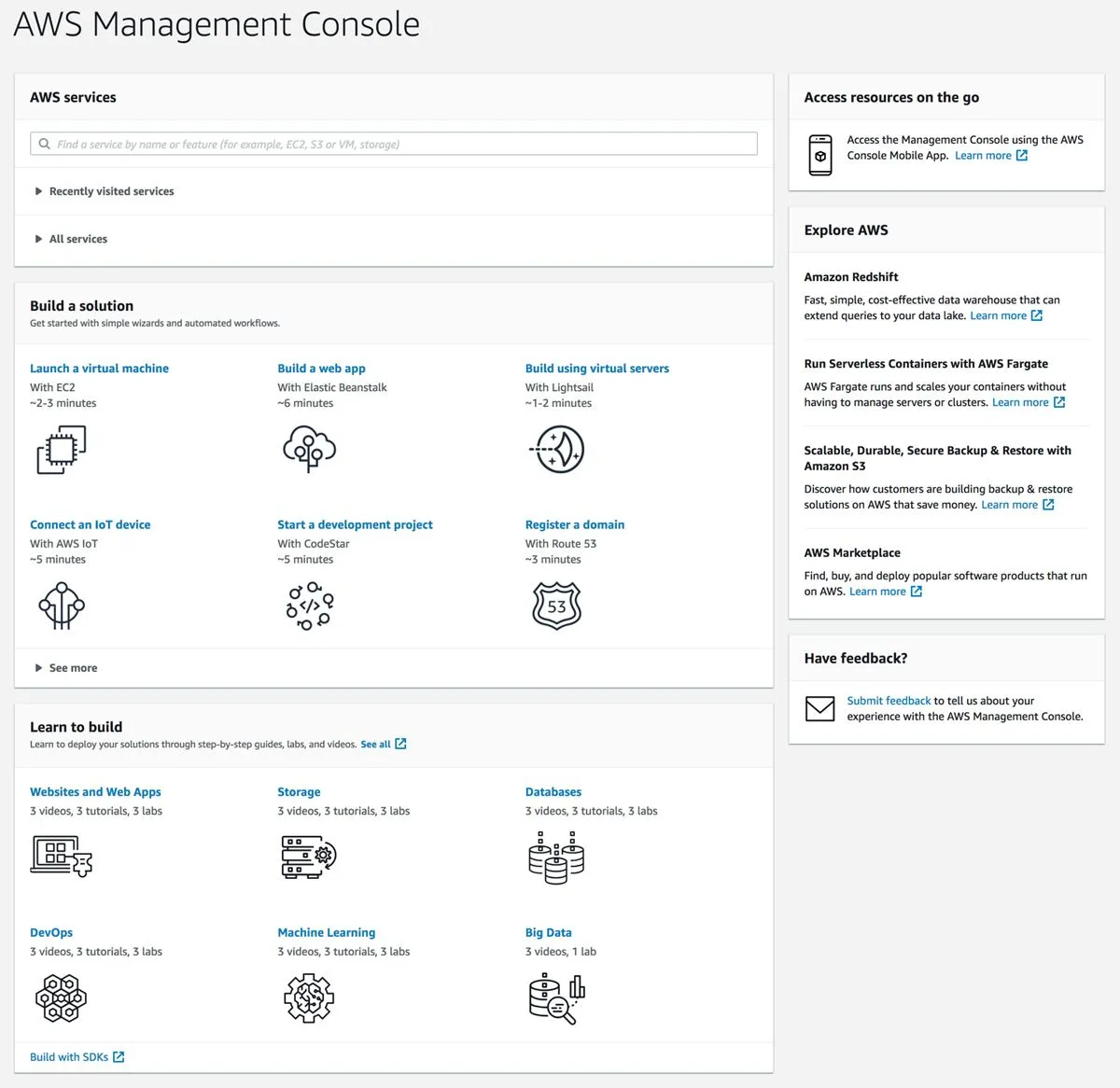
- Root user vs. IAM (Identity and Access Management) user. There are two types of users in AWS: an account owner (or root user) and users granted with certain roles and access privileges (IAM users). A pro tip: for safety and security measures, Amazon recommends reducing the employ of root user credentials to a minimum. Instead, you can create an IAM user and grant them total access.

- Access Key ID and Secret Key. Side by side to Console access (developed generally for users with a limited technical groundwork), there also exists programmatic access. And here you'll need AWS admission keys to make programmatic calls.

- Saucepan. In your Amazon S3 Console, you create buckets - a so-called parent binder for your assets and their metadata. By default, Amazon S3 grants yous 100 buckets per account, merely you tin increase this limit by up to 1000 buckets for extra payment.

Saucepan = Object 1 + Object 2 + Object 3
- Object. We store objects in buckets. Composed of files, plus their metadata (optionally), an object can be any kind of file you need to upload: a text file, an epitome, video, sound, and so on. Your maximum size allowed is 160 GB.

Object = file + metadata (optionally)
- Folders. You can group your objects by folders. Only recall that Amazon S3 has a flat file organization in contrast to traditional bureaucracy where your assets are grouped in directories and subdirectories. Flat construction ways that yous achieve organizational simplicity with the assistance of unique file and folder names. For example, you add a project name + customer proper noun + due date and then you won't encounter the same name beyond the storage.

- Region. Amazon S3 buckets are region-specific. This ways you lot choose the geographic location where you desire the visitor to store your assets. Remember that objects in the saucepan won't leave their location unless you lot specifically transfer them to a different region.

- Key names & prefixes. Primal names refer to object names, and together with prefixes (a common cord in the object names), they aid you access the needed file quicker and easier. Let's say yous shop photo1 in folder1 in your bucket. Then y'all can search your files by entering bucket/folder1/photo1 instead of opening folders and buckets manually.

We've prepare an Amazon S3 account: How to get started with using it
How to create a bucket?
After yous've signed in to your AWS Panel and accessed your S3 user interface, it'southward a high time to explore your user account. And then, the first thing you exercise is to create an Amazon S3 bucket.
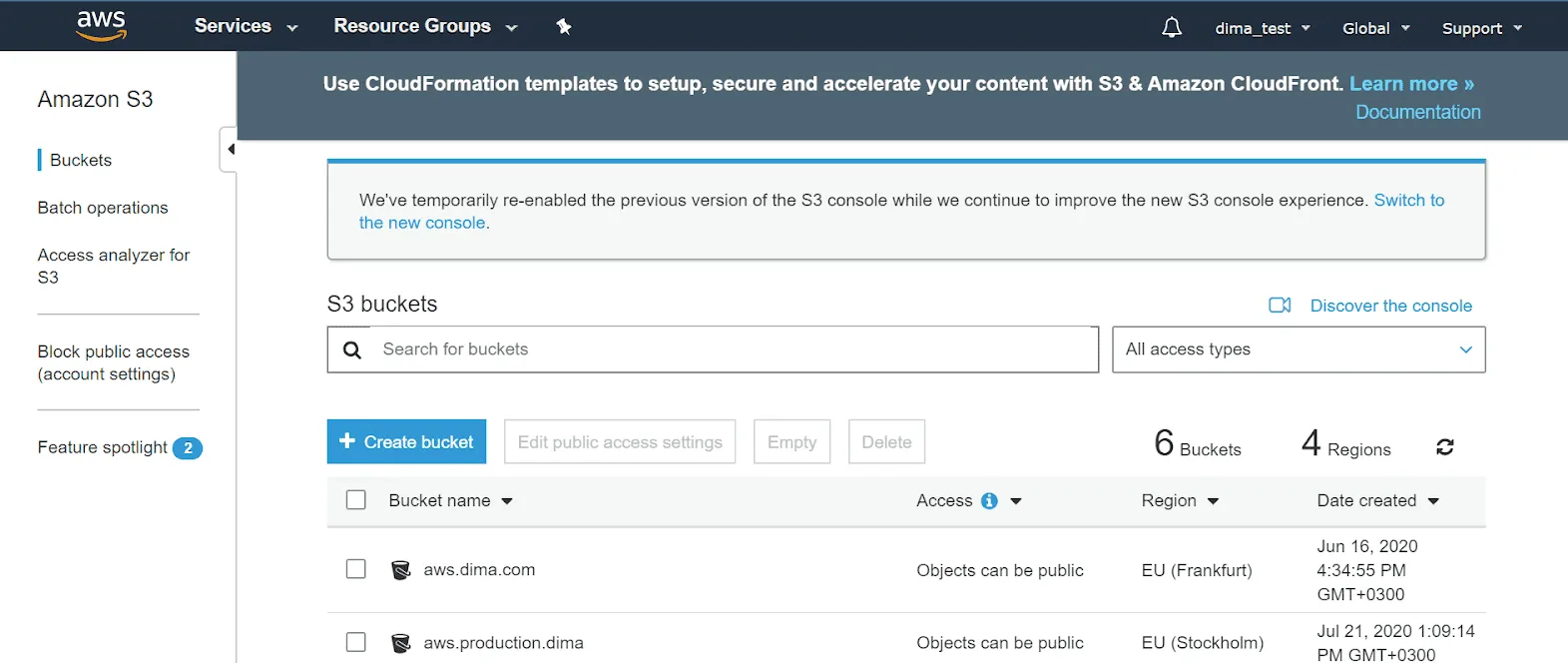
Here you need to betoken your bucket name and geographical location where you lot desire Amazon to store your saucepan and its content. We've already mentioned flat structure every bit a special feature of Amazon S3 storage, and then be attentive when you choose your saucepan proper noun. The organisation won't let you lot go unless the name 1) is unique all across the storage 2) is between three and 63 characters; and 3) contains but lowercase characters.
As for the region, the storage allows you to create a saucepan in the location you lot want. And the all-time thought is to choose the one that is the closest to you lot. In this mode, you won't merely reduce response time but volition cut costs and meet regulatory requirements.
What else can I exercise with my saucepan?
1) Permissions
In the same menu, you as well set up permissions and configure options. Depending on the roles in your team, y'all make up one's mind who volition create, edit, and delete objects in your bucket.
2) Public vs. individual access
And then choose between public and private access. For the sake of security, we don't recommend granting public access unless yous use this bucket to share your files with many clients or partners. If this is not the case, y'all tin can always make particular files publicly accessible to others.
3) Versioning
Equally for configuration options, enable versioning if you're planning to store different revisions of the aforementioned object. Let's say you're designing a new logo for your marketing campaign. Throughout this process, there will exist multiple updates to your file when you experiment with the color palette or elaborate on the font.
With versioning, dissimilar versions of your file are stored nether the aforementioned key, and y'all retrieve them all at once when accessing the object. Amazon S3 users also appreciate versioning when it comes to awarding failures or unintended actions (for example, when your colleague has deleted the precise revision you all agreed to use).
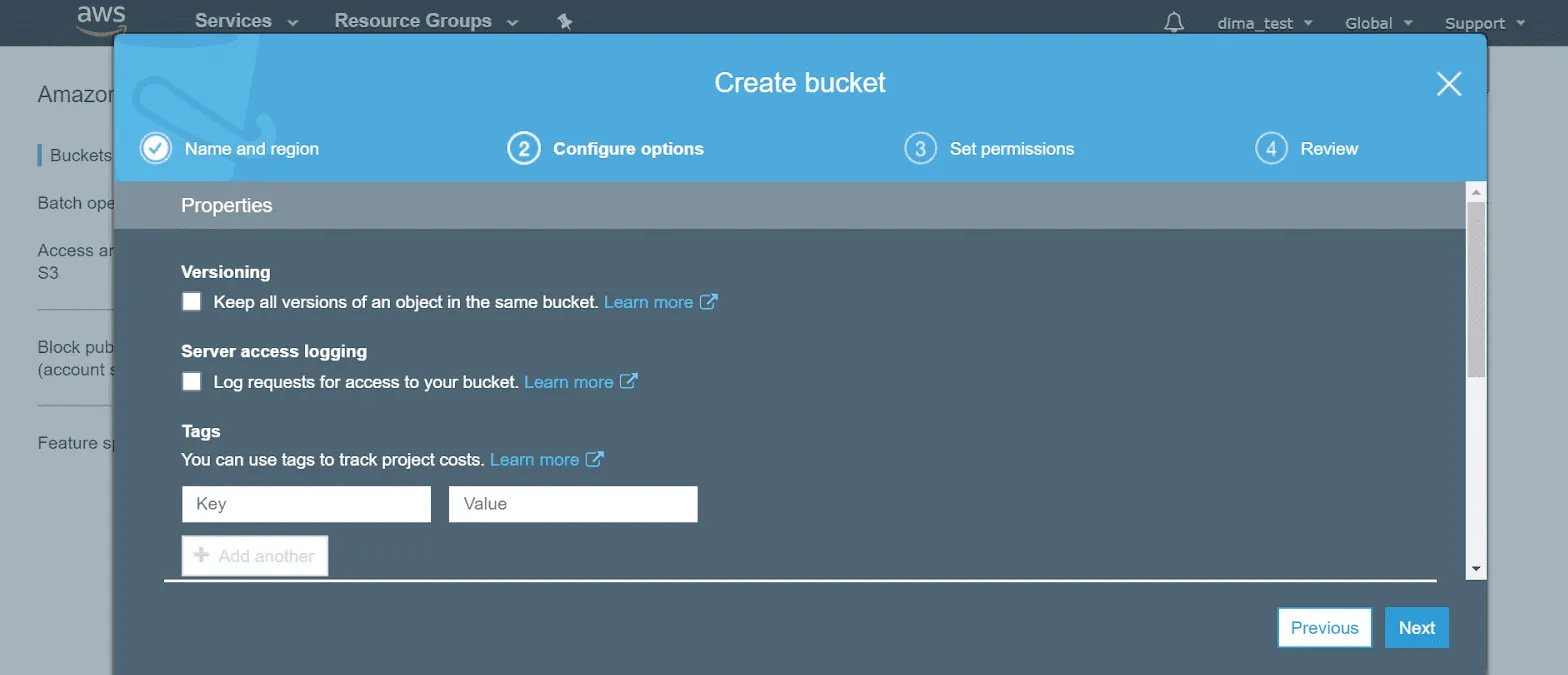
4) Server vs. object access logging
Tick server access logging in case you want to rail requests made in a bucket. Admission log reports come up in handy to you in times of audits and as a safety precaution.
Y'all can also endeavor out a more avant-garde object-level logging. On this occasion, you lot're free to filter events to be logged, and you track them in CloudTrail - a separate AWS auditing service.
five) Encryption
Finally, encrypt your files if you desire to additionally secure your data. Encryption stands for encoding your data so it could exist accessed just by using a password and specially-designed encryption (decryption) cardinal. Not to go any further into coding, S3 storage enables you to choose the default encryption when you create a new saucepan.
Getting within the bucket
How to upload your files to Amazon S3?
In the bucket, we store our objects (files + metadata) and employ folders if we need to group our files. You'll meet that uploading files to S3 storage is as easy as pie. You merely printing on upload and either elevate'n'drop your materials or indicate-and-click them - use the fashion which is more convenient for yous. Click on create a folder if you lot're willing to group your objects in folders.
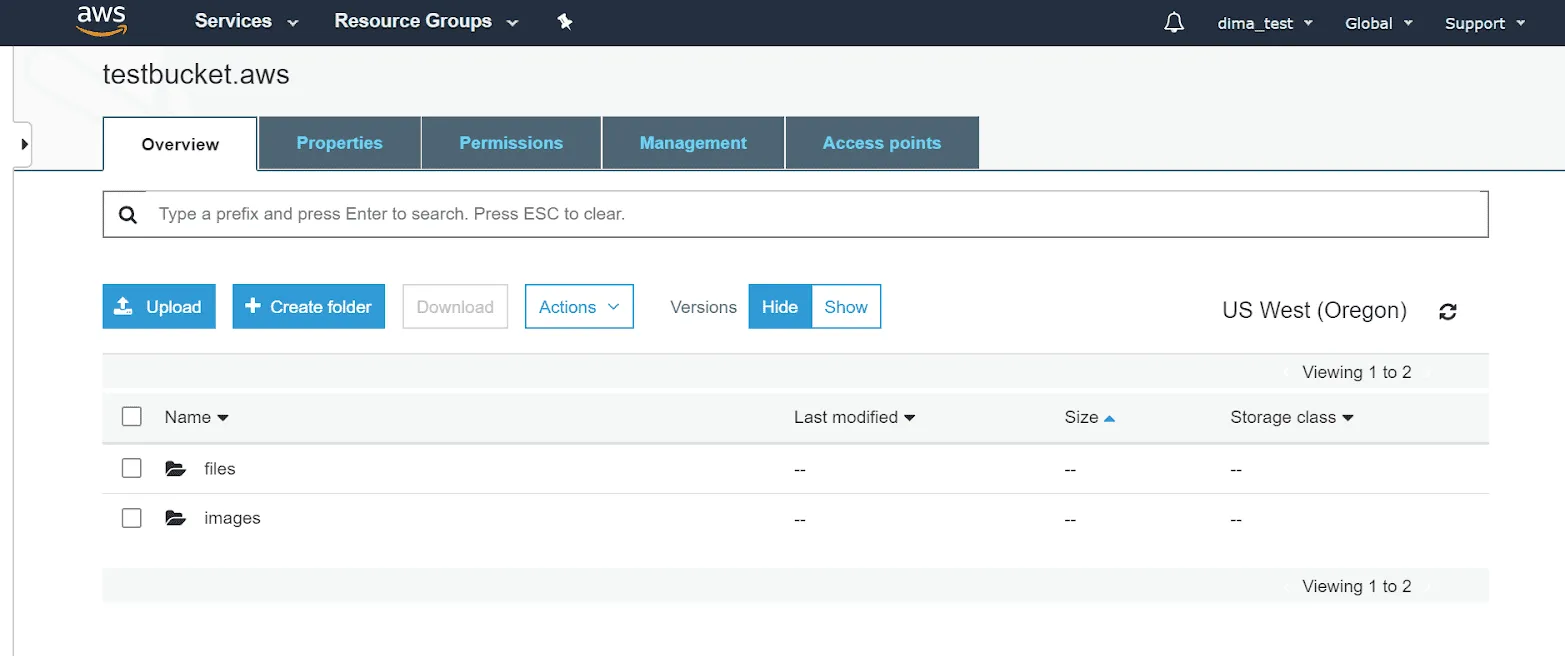
Other than that, feel costless to upload a whole folder. Merely the drag'n'drop option is available to you in this example. Yet it simplifies the job if yous need to upload a broad scope of files and reverberate their structure. With binder upload, Amazon S3 mirrors its structure and uploads all the subfolders even though this way could overall be more than fourth dimension-consuming.
What else should I know when uploading objects to S3 storage?
If y'all don't listen, I'll repeat myself: Amazon S3 uses object-based storage. This means no filesystem at all! Every file you upload (whatever the origin, type, and format) gets converted to an object and is found in a bucket later.
Since there is no filesystem (at least in the common meaning of this discussion), we won't speak about names as filenames anymore. (And we've already mentioned that S3 is all about unique names - this is how we organize and access files in this storage service.) This is why when you upload a new object, yous won't even have the possibility to choose a proper noun for information technology.
Simply to compensate for non-existing filenames, the service uses an object key (or primal proper noun) which uniquely defines an object in the bucket.
What are other configuration options during the upload? The same equally with buckets, you can as well use encryption to secure your data and manage public permissions. Plus, you tin can make a particular file accessible to a certain user or users.
Choose storage classes based on how oft you're planning to admission your data. For example, S3 Standard (the default type) is designed for critical, non-reproducible data you're going to manage regularly.
Metadata vs. Tagging
Autonomously from a fundamental (and data), each S3 object has a list of metadata you set when uploading information technology. In brief, this is additional information virtually the object like when it was created or by whom. The metadata is stored past using a fundamental-value organization where fundamental helps to identify an object, and value is the object itself.
To put it only, content length or file type are the keys when nosotros're referring to these kinds of metadata. Accordingly, their values will be the object size in bytes and dissimilar file types like PDF, text, video, audio, or any other format you can remember about.
Following the same logic, you lot can add tags to your files that aid to search, organize, and manage admission to your objects. Tags are the same primal-value pairs, and they're also kinds of metadata, but there is a significant difference between them.
An object in S3 is invariable, the same as its metadata as a part of the object. The AWS Panel does allow you "to edit" metadata, but information technology doesn't reverberate the reality. What actually happens is a new file version being created every time you alter the object.
The state of affairs is different with tags - they're additional, "subresource" data concerning an object. Since they're managed separately, you lot won't alter a file when calculation tags to it. Overall, yous can choose upwardly to 10 tags per object in S3.
Folders as a means of group objects
How exercise we use folders in S3?
Every bit you lot've probably figured it out, buckets and objects play cardinal roles in S3 storage. But this is not the instance with folders. These were only added to recoup for the absent-minded file hierarchical organisation to improve file management and access.
In Amazon S3, folders help you to find your files cheers to prefixes (located before the key proper name). Let's say you create a binder named Images, and there you store an object with the central proper noun images/photo1.jpg. "Images" is the prefix in this example. "/" is the delimiter, automatically added by the system (avoid them in your folder names). The more folders and subfolders you create, the more prefixes your file volition get.
And then you tin can apply these prefixes to access your data. Just blazon one or more prefixes into the S3 search engine to filter your searches.
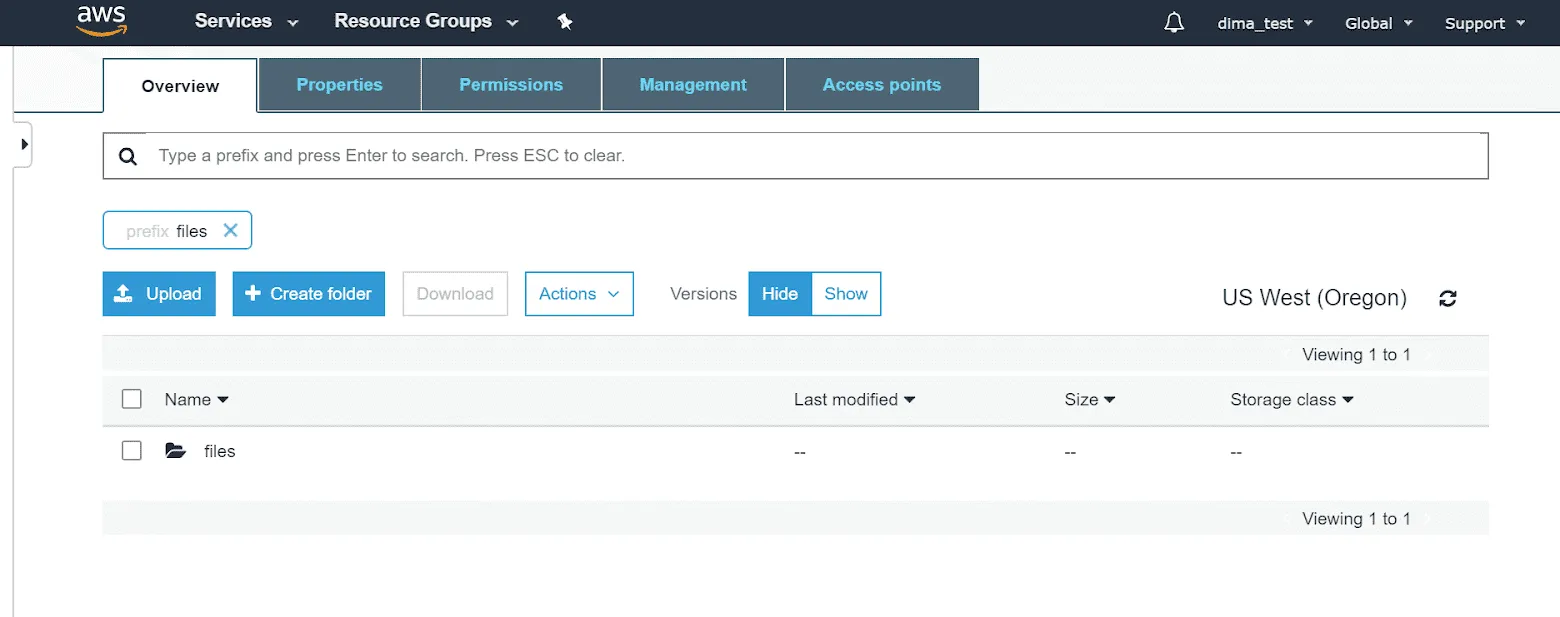
Actions with folders and objects
What you can do with your files and folders is pretty standard in Amazon S3 storage. You tin create new folders, delete them, brand public, copy, and move. Change their metadata, encryption, storage class, and tags - but, equally expected, no renaming option is available.
Your interaction with objects won't be very unlike. With Amazon S3, you'll accept no trouble with uploading and copying objects. Plus, yous can open your avails, movement, download, and delete them (in dissimilar formats if needed).
An interesting option includes recovering deleted objects, which tin can be especially useful in example of organisation failures. Simply be aware that "undeleting" objects is possible merely in buckets with enabled versioning.
Getting back to upload over again: Moving big data to Amazon S3
We've fabricated it pretty articulate that uploading assets to Amazon S3 should non cause whatever difficulties. And it is so if we're speaking well-nigh small data. But what if your digital library extends to 1000 files or 10 000, or a meg? Can you imagine you lot elevate'northward'drop these files or betoken-and-click them?
What a waste matter of time it could be! Fortunately, there are other, easier and faster ways to motility massive information to your S3 storage…
Online tools
1) Straight Connect is an excellent solution for transferring big amounts of data. Its thought is to create a direct connection betwixt your on-premise data sources and Amazon'due south network. In this way, y'all bypass any obstacles created by your internet provider and web traffic and motility your data quicker and easier.
Every bit usual, you lot can request a connexion in the AWS Console, only choose the region you want to employ, gear up the number of ports, and their speed - and you can apply the solution.
When to employ this solution?
- When you demand to transfer big-calibration data, and your Internet connexion is slow.
- When you're eager to reduce costs and achieve a more consequent network experience.
2) AWS Data Sync is very much similar Directly Connect but is more sophisticated, with improved direction and automation options. For example, AWS Data Sync allows you to rail your transfers, schedule item processes, adapt speed and bandwidth.
But a more than advanced solution also ways more complex transfers, doesn't it? So users with limited knowledge in coding may find Data Sync too difficult.
When to use this solution?
- When you lot need additional automation for your information transfers to cut costs. For instance, cull Data Sync if you want to filter your migration of data pointing out which folders/files to move first.
- When you work in a large enterprise, your information transfer will be completed under the supervision of developers.
3) Amazon S3 Transfer Acceleration was designed to speed up your information migration processes to S3 storage specifically. The solution works perfectly for data transfers across long physical distances.
When to use this solution?
- When you demand a fast transfer and/or for a longer distance.
- When you have to move your data from one bucket merely.
4) Amazon Kinesis Firehose is a existent-fourth dimension data migration tool yous enable through the AWS Panel. The service is good due to its like shooting fish in a barrel-peasy interface - y'all set up the delivery in a few clicks. Plus, information technology's more cost-efficient than other Amazon solutions as y'all pay non for the service but for the corporeality of data you transfer.
When to use this solution?
- When you're looking for a streaming data migration tool.
- When you don't want to waste your fourth dimension on administration.
- When you're planning to cut costs by ways of paying as you go.
5) Seismic sea wave UDP is one of a few complimentary of charge solutions available to move big information to Amazon S3. It doesn't piece of work online yet, and so you'll take to download and install the tool. Plus, the basic knowledge in coding is necessary to work with this solution.
When to use this solution?
- When your budget is limited, but you still need to movement large-scale data to your S3 storage.
- When you need to transfer files only (the solution doesn't support moving folders and subfolders).
- When you don't ain any sensitive data: Tsunami UDP doesn't encrypt your information.
6) Pics.io Information Migration is a new service delivered past Pics.io DAM. Choose this option if you lot need to transfer big data (and metadata!) to your AWS storage but don't want to go into problem by doing everything on your own.
When to use this solution?
- When yous need to migrate your data from i source to another. It could exist some other cloud storage to Amazon S3. Or moving files betwixt within your buckets.
- When y'all want to consummate migration quickly & easily. In this example, you lot just contact the Pics.io support team, grant a few permissions, & your DAM solution takes care of the rest.
- When you lot're planning to movement metadata together with your files. This option allows yous to preserve your folder structure, transfer keywords, file descriptions, so on.
- When you lot care about the security of your data. Pics.io volition complete the upload in the safest mode possible.
Give Pics.io DAM a endeavor
Free vii-24-hour interval trial
No credit carte du jour required
Set up in 3 minutes or less
Offline tools
seven) AWS Import/Export Disk is an offline data transfer solution. Here y'all upload your data to a portable device and ship it to AWS. Then the company moves the data to your storage directly using its high-speed internal network. Every bit a dominion, this happens the adjacent business organization day when Amazon receives your device. As soon as the export/import is completed, the company sends back your external hard bulldoze.
When to use this solution?
- When preparing and mailing your data sets will however take less time than uploading your files in any other way. Approximately, you'd better consider this option when the size of your data is larger than 100 GB.
- When shipping an external difficult drive with your information volition remain cheaper than upgrading your connectivity (in case you're planning to move your data online).
eight) AWS Snow Family unit is another offline solution, composed of iii dissimilar transfer services (AWS Snowcone, AWS Snowball, and AWS Snowmobile). The idea is similar to AWS Import/Export Deejay, but this time you employ AWS appliances to motility your large-scale data.
You social club the service online through AWS Console, copy your information to the device, and render it in one case the upload is completed. The whole procedure estimatedly takes nigh a calendar week, shipping and information transfer included. But with this option, you tin can move from a few terabytes to petabytes of information.
When to use this solution?
- Again, when the waiting fourth dimension for shipping and transferring data is justifiable equally compared to any other upload method.
- Cull between AWS Snowcone, AWS Snowball, and AWS Snowmobile, depending on the volume of your information. AWS Snowcone is the smallest physical storage in the AWS Snow Family. Information technology's piece of cake and portable, and users order Snowcones for information transfers, the aforementioned every bit in cases of connectivity issues.
- AWS Snowball is for more large-scale migration of data (from 42 TB). And finally, AWS Snowmobile is a whole aircraft container. With this service, you lot get more secure, high-speed data transfer, GPS tracking, video surveillance, etc., etc.
In case yous want to go deeper in the multifariousness of Amazon S3 transfer acceleration tools, don't miss our post on this topic.
Common issues and solutions
Amazon S3 attracts users with its multiple benefits. The storage is highly durable, has unlimited storage abilities, and unique security opportunities. Although about of the time it's a sheer delight for you lot to work with this storage, disruptions even so happen.
Hither's how you tin solve them:
Trouble 1: Your access to the storage is denied.
Solution 1: This means yous're using a wrong admission key and/or secret central, or yous may simply have no rights to admission the storage. Check your credentials also as the permission policy to your IAM user if this is applicable.
Problem 2: Your specified primal doesn't exist.
Solution ii: Y'all receive this message if there are bug with the naming of your files and buckets. Check the names, remove punctuation and special characters if present.
Trouble 3: Your signature doesn't match.
Solution three: If yous come across this error message, it's likely that you used uppercase messages and/or spaces in your bucket name - rename the bucket (or you'd amend create a new one with proper naming conventions).
Problem 4: Your files don't upload/download.
Solution 4: Check your cyberspace connexion and/or speed. Remove the enshroud. Make sure you have free infinite in your storage, and your uploads represent to Amazon S3 file requirements.
Then y'all may need to check your host settings: get to Downloads - Settings - Extensions - Amazon S3. Is your host prepare correctly? The region? Review the filenames of your files (the number of characters and whether they have any special characters, for case). If yous're using a mobile device, check the size of your photo/video - it should not exceed 2 GB.
Problem 5: When your files grow in number, you'll find soon it becomes more hard to manage them.
Solution 5: Digital Nugget Management can enhance your Amazon experience and resolve this issue for you.
Avant-garde file organization with Pics.io DAM
Movement your S3 storage to a whole new level by integrating it into Pics.io DAM. This is an advanced solution for organizing and distributing your files so as to maximize your squad's functioning.
Pics.io DAM is a win-win strategy for you as an Amazon S3 user. Since it works on top of your storage, you won't demand to launch any boosted software (and migrate your files once again), no one will have access to your storage, & no charges for storage infinite. Still y'all go:
- Unique file organisation. No need to search your storage for hours or cram all those prefixes. Pics.io displays your S3 storage in a more usual and user-friendly manner and then you can navigate information technology easily. Plus, it is very visual - you tin can actually encounter all the thumbnails, and information technology saves a lot of time in daily work.
- Admission. With DAM, you admission your files very easily by keywords, locations, dates, then on. Or you may use the more advanced search: for example, you tin notice your files by content with AI-powered search.
- Collaboration with your squad. Your colleagues can leave you messages under specific assets or mark the areas they want to discuss. Tag your teammates directly in your storage. And go updates on whatsoever changes in the directory.
- Sharing. With Pics.io DAM, yous have unique shareable websites where you place your materials and then send the link to your clients/freelancers/partners. Customize these websites: for example, add your domain name or change the color palette to promote your brand.
- Security. Add one more than level of security to your storage past changing rights and permissions. For example, yous tin can specifically determine who can upload/download your assets, edit, and delete them. And many other pleasant surprises similar linked avails, a file comparing tool, communication center, etc.
Give Pics.io DAM a try
Free 7-day trial
No credit carte required
Set up in 3 minutes or less
Planning to be included in Amazon listing? Don't miss our overview of the nearly mutual Amazon Listing Optimization Mistakes and how to avert them.
Terminal but not least, if you had tried multiple public deject providers, but even so decided to stop on Amazon S3, this patently happened for a reason. With its scalability, convenience, and security, Amazon S3 is indeed ane of the leading storages available on the market today. In plough, our Pics.io squad will assistance yous to make the most out of your storage and enhance your Amazon S3 experience.
Source: https://blog.pics.io/a-complete-guide-to-uploading-and-managing-your-files-in-amazon-s3/
0 Response to "How to Upload Data to S3 Bucket"
Postar um comentário